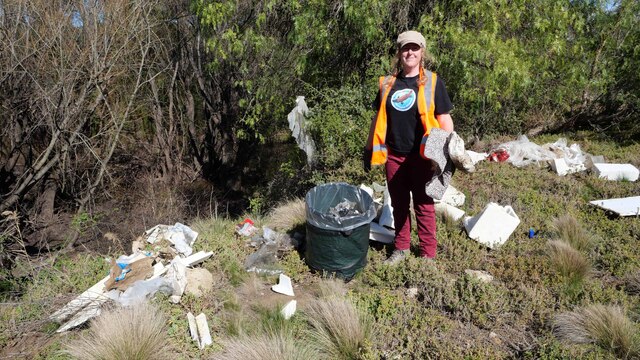
Volunteers working to keep the Werribee River clean say they feel “disappointed, frustrated and very sad“ at the amount of rubbish threatening the river’s platypus population.
Bacchus Marsh Platypus Alliance held its second Clean-up for Platypus event on Sunday 10 August.
Alliance secretary Natasha Evans and 43 other volunteers spent the day plucking rubbish from the river and its banks.
Ms Evans estimated that 95 per cent of the rubbish collected was from the construction industry, including food and beverage packaging used by construction workers. The rubbish also included polystyrene waffle pods, plastic bags and packaging, foam sheeting material, black plastic, corflute construction signs, cement bags, cardboard boxes, tarps, degraded sediment barriers, packing tape, star pickets, timber and Polypipe.
She said a small percentage of other rubbish was from households such as boxes from parcel deliveries and plastic tablecloths.
“The community really enjoys using and connecting with the Werribee River corridor and its wildlife and it makes people distressed to see the area so polluted,“ Ms Evans said.
“Developers use the beauty and utility of the river in advertising to attract first home buyers to their estate, however the very process of building it destroys these values. We are worried about the day that we will encounter a platypus or another animal entangled in this rubbish, worried about the scale of microplastics breaking down and going into the waterways, worried about the long-term health and safety for wildlife and humans.
“The overwhelming thing is this issue is not isolated to us, it is playing out on the urban fringes and along the waterways of all major cities in Australia.“
The alliance has called on builders and Moorabool Council to do more to stop the rivers of rubbish.
The group says builders could have enclosed skip bins on site with lids into which all rubbish is placed at the end of the day. They could construct temporary site fencing to catch rubbish including polystyrene before it blows away and move away from using polystyrene waffle pods in slab construction.
The alliance would also like to see council play a greater role by increasing fines for builders who do no comply with rubbish containment regulations, introduce stricter surveillance and enforcement of building site amenity laws, issue more infringement notices, prioritise funding for compliance and enforcement teams and educate builders about the impacts of construction waste on waterways and the environment.
Moorabool mayor Paul Tatchell said “Council has launched a campaign to specifically target people coming into our shire to illegally dump rubbish.“
“We are increasing our surveillance and installing more cameras across the shire to find those responsible and we are prosecuting offenders. We encourage the community to support this campaign by reporting instances of illegally dumped rubbish via our website.”
Ms Evans said there is a long way to go to get builders to dispose of their rubbish correctly.
“A lot of this rubbish has blown or been dumped by builders onto the banks of the river. This poses a great risk of entanglement to platypus, rakali (native water rat) and other wildlife such as fish, birds, bats, wallabies and kangaroos. It is so vital that the community comes out to support these clean-ups both for the benefit of the wildlife and the community’s enjoyment of our environment.
“There is no other way this rubbish gets cleaned up, unless it is by volunteers. It takes a town to save a platypus.“
The alliance’s next event is a platypus spotting session in Bacchus Marsh in September.