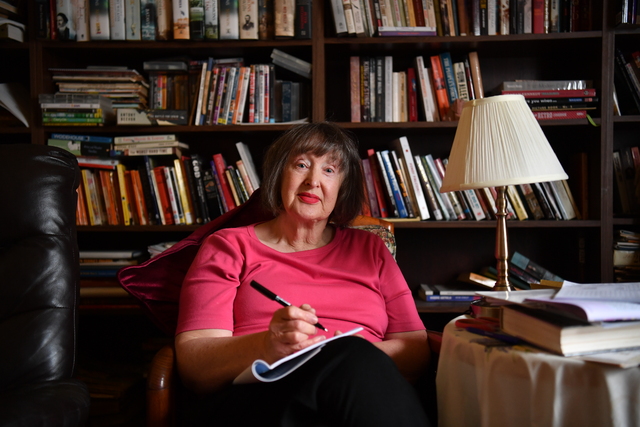
Williamstown amateur historian Barb McNeill is Star Weekly’s history columnist. This week she tells the tale of the death of Footscray’s Malcolm McLean Appleby Esq.
Around Footscray and its environs in late 1947, rumour had it that the local wallopers had declared open season for anyone who wished to rid the world of Malcolm McLean Appleby Esq, notorious resident of Eleanor Street, Footscray.
Initially believed to have been a victim of an exceptionally nasty brawl the day before, Appleby was found by Constable Aubrey Conn shortly before midnight on 28th November 1947, lying unconscious with a fractured skull in the doorway of the Railway Hotel in Nicholson Street. By his side was a bloodstained ten shilling note. The policeman summoned an ambulance, positive that Appleby had either been donged over the head by a beer bottle or kicked by hooligans who relished the jolly pastime of sinking the boot. It was only when the injured man was admitted to the Royal Melbourne Hospital that X- rays showed the true cause of injury: a bullet to the back of the head.
He couldn’t be interviewed, and quietly died the following day.
It wasn’t the first time that Mr Appleby had been the target of shooting practice conducted by the underworld. In 1945, Harry Hinge, of Droop Street, Footscray, was charged with wounding with intent to murder following some minor unpleasantness over a game of two-up. Poor Harry’s aim wasn’t in top form; his victim survived the shots to his groin, dobbed Harry in, and had the satisfaction of seeing him in court.
It is rare that crooks and police are in accord, but in Appleby’s case, they were solidly united. Neither side wanted him in Footscray or anywhere else in Australia. A former boxer, now full-time gambler, he had a reputation for extreme violence in his chosen profession of bash artist and stand-over man. He also possessed a volcanic temper and a squad of goons who were more than happy to deal out exemplary punishments to those who upset their boss.
Appleby had respect for neither sex nor age and delighted in seeing people visibly tremble in his presence. He had clocked up convictions for assault and enjoyed the prestige accorded to those who beat manslaughter charges. Doubtless there were many crimes for which he had never been charged; people were too terrified of Appleby to mention the many feuds and fights in which he was an active and enthusiastic participant. Denizens of Footscray kept their own counsel rather than have the goon squad, or even worse, Appleby in person, paying them a nocturnal visit with malice aforethought.
Wherever illegal betting occurred, Appleby was sure to be there, either running the show or betting impressive sums, especially at Baccarat and two-up. He was best mates with the local SPs and the mere mention of his name was sufficient to persuade welshers to pay up. Not that Appleby eschewed lawful gambling; he loved a bet on the horses, but controlling his own private fiefdom in the sleazy dives of the underworld was more to his liking.
On the day of his death, he had won a plump sum at the Packenham Races, as witnessed by his friends, Joseph McNulty, Thomas Buckley, Clarence McGlynn and Roy Clarke, who likewise enjoyed a legal flutter. Following their wins, they had a few drinks then returned to Footscray.
Never shy about his successes in life, and knowing that nobody in their right mind would dare take his cash from him, Appleby let several people know about his winning streak.
Sometime between 11.30 pm and 11.45 pm, somebody in Nicholson Street shot Appleby at close range in the back of his head. He had been walking with Buckley and McGlynn ahead of him, and Clarke and McNulty behind him, according to eyewitnesses and the men themselves. Appleby collapsed into the doorway of the pub, which just happened to be a stone’s throw from one of the many gambling dens in the area.
The men ran for their lives up Nicholson Street, shouting at passersby, “Did you see that?” Wisely, nobody had seen or heard a thing.
The men’s suspicions fell on McNulty, the other three thinking that he must have done it, though none had noticed any firearm. McNulty denied it. Why would he shoot a mate?
Others thought McNulty the most likely culprit. Seven armed detectives unsportingly raided the men’s homes whilst they were lost in peaceful slumber, and hauled them into Footscray Police Station to be charged with the murder.
The news shot around Footscray. Not a single tear was shed. Many openly celebrated in the pubs. “He had it coming… About time….He deserved it… No loss… Good riddance..”
The little sadness that was expressed came from those who felt that whoever had murdered Appleby had done Footscray a public service, and nobody should be punished for that.
The inquest was well attended, with eyewitnesses happily giving their various angles. Several people, including Roy Clarke, mentioned that the police had announced an open season for anyone who killed this widely hated thug. The Court frowned. “Did you hear this from the police themselves?” The replies were in the reluctant negative.
The coroner’s task was an unenviable one. Robbery was not, as first thought, the motive. The bloodied ten shilling note found by Constable Conn was proof of that. Three men who had been hanging around near the doorway of the pub had seen the victim fall, but not who had shot him. A woman had heard a shot at around 11.45 pm, but hadn’t seen the shooter .
Great was the relief of the friends and families of the three accused when the City Coroner, Mr Burke, announced that although McNulty probably had some involvement in the crime, there was insufficient evidence to try him, or the others. He could not make a finding against them.
To the delight of the underworld and Victoria’s uniformed and plainclothes police, Mr Burke gave his finding that Malcolm McLean Appleby had been “…feloniously slain by persons unknown.”
On 17th December 1947 at the City Court, just in time to enjoy Christmas, all charges against McNulty, Buckley and McGlynn were struck out and a jubilant crowd hurried off to party.
And if the pubs ran dry, nobody needed to worry. There were still plenty of sly groggers in Footscray.