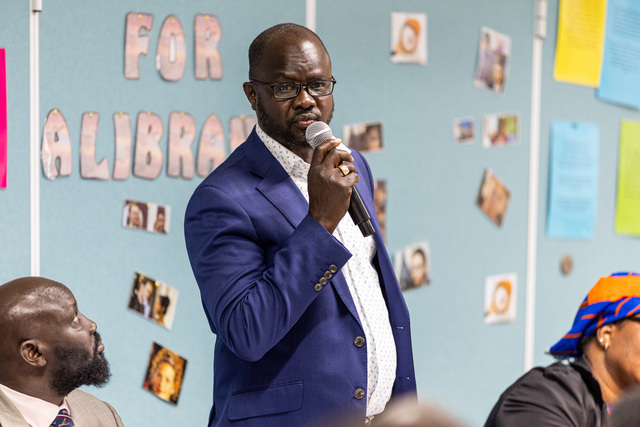
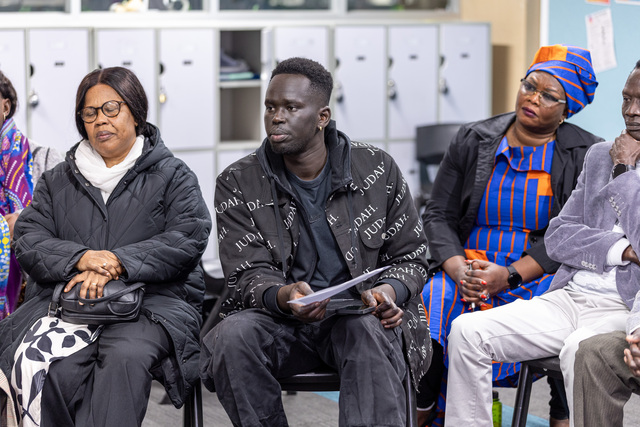
The South Sudanese Community Association in Victoria (SSCAV) convened two ‘emergency’ meetings in the wake of recent tragedies.
The first assembly was held at Melbourne University’s Wyndham Campus on September 20, followed by a second meeting in Springvale on September 21.
Melton resident and secretary of youth at SSCAV, Titan Debirian said real change requires broader participation in community decision-making.
“It’s not enough to have two people at the table,” Mr Debirian said.
“We all need to be at that table, rolling up our sleeves and doing what is necessary to get our community to where we want it to be.”
He criticised some community leaders for excluding young people from decision-making spaces.
“A big cohort that hasn’t been involved, that hasn’t been given a voice, that hasn’t been supported to be at this table is the young people,” Mr Debirian said.
“We’ve been ignored, but that has to stop and the only way that stops is if you guys show up. No more standing on the sidelines—that doesn’t work,” he said.
“Let’s be clear: nothing changes unless we change it. Not the government. Not the police. Not community leaders. Without you, the conversation is incomplete. With you, we can start building real, tangible solutions.”
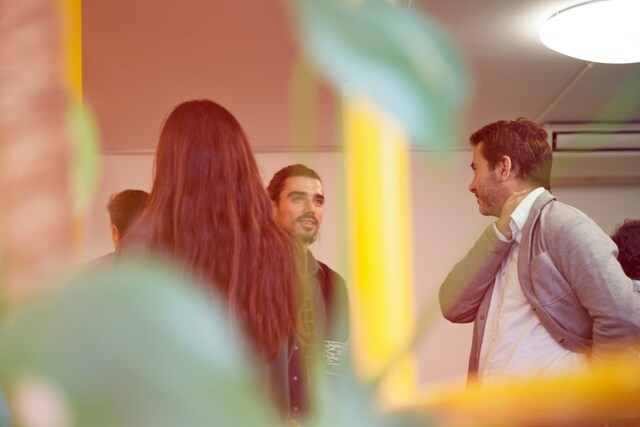
Young people responded to Mr Debirian’s call, turning out in force for the meetings.
“This is about transparency, inclusion, and young people realising the power they already hold,” Mr Debirian said.
“We needed to flood those rooms! Young people have to show up because you know what’s going on, you know what you want for your future. If you’re not at the table we won’t find solutions.
“All the influencers within our community – it’s time to have these conversations, use your platform to share, talk about what you want to do.”
He said the community is exhausted by “funerals, pain and disorder”.
“We can’t keep repeating the same responses and expecting different results. It can’t be funeral after funeral and we don’t change things. Why are we always here?
“Crime …street culture is not specific to the South Sudanese community, but our young people keep falling to it.”
Chair of SSCAV Andrew Ohide said the meeting focused on strategies to restore safety.
“Our kids don’t feel safe anywhere. Some don’t want to go out at all, they don’t want to go to school, they don’t want to go to shops, to the park,” Mr Ohide said.
“This problem is happening in the west, in the east, everywhere. We want to work with all councils, different communities, parents, police and other government bodies.”
Community advocate and panel speaker Deng Ajak Chiengkou described the gatherings as “lifelines”.
“In the face of challenges and the deaths of many young South Sudanese, the youth are standing up with remarkable strength,” Mr Chiengkou said.
“They call for forgiveness, for healing, and for resilience in the midst of loss, worsening mental health, and youth violence.
“They are holding conversations many adults avoid, and in doing so, they are teaching us courage.”
Mr Chiengkou urged parents not to “remain absent”.
“They must be in these rooms, not only at funerals but at dialogues. Healing cannot be left to the youth alone. Dialogue between parents and children is essential. Without it, misunderstanding grows and the distance between generations widens.”